Advocate Yukta Nayyar ☏ +91 98038 04835

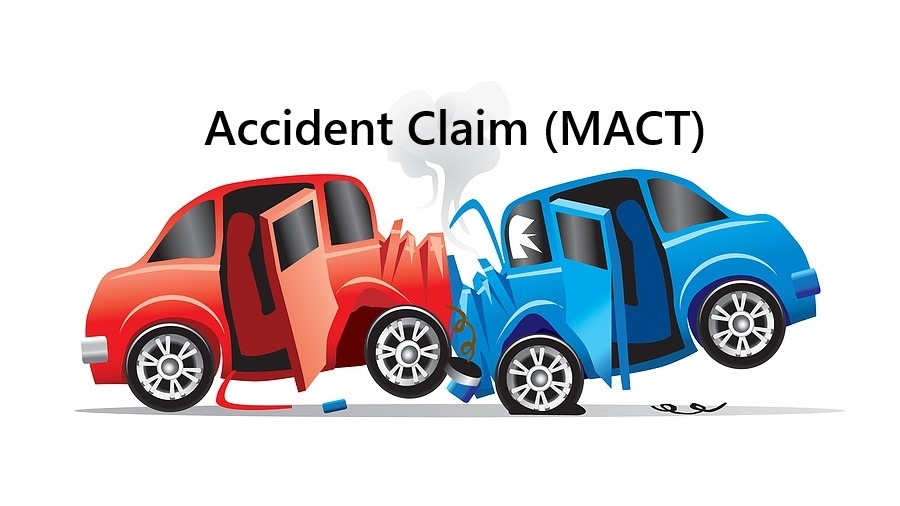
Accident Claims (Motor Accident Claims Tribunal – MACT)
Road accidents are unfortunate events that can change lives within moments. They often bring physical injuries, emotional distress, and financial hardship to victims and their families.
To provide relief and ensure justice, Indian law has established a legal framework through the Motor Vehicles Act, under which victims or their families can seek compensation before the Motor Accident Claims Tribunal (MACT).
The purpose of these laws is to ensure that victims of road accidents are compensated fairly for the losses they suffer due to the negligence or fault of another person.
1. Understanding MACT (Motor Accident Claims Tribunal)
The Motor Accident Claims Tribunal (MACT) is a special court established to deal exclusively with accident-related compensation cases.
It provides a quicker and more accessible process than regular civil courts for victims of road accidents to claim financial relief.
MACT cases generally arise when:
A person is injured in a road accident.
A person dies in a road accident, and the legal heirs claim compensation.
Damage is caused to vehicles or property due to an accident.
The tribunal examines evidence, determines fault or negligence, and decides the amount of compensation to be awarded to the victim or their family.
2. Who Can File a Claim
A claim for compensation before MACT can be filed by:
The injured person, in case of personal injuries.
The legal heirs or dependents, in case of death.
The owner of the vehicle or property, if damage occurred.
Any authorized agent on behalf of the claimant.
The claim can be filed against the driver, owner, and insurer of the vehicle involved in the accident. Usually, the insurance company is liable to pay the compensation, depending on the terms of the insurance policy.
3. Legal Basis for Compensation
The law allows compensation for losses arising from:
Bodily injuries or permanent disability.
Death caused by negligence in a road accident.
Damage to property or vehicle.
The compensation is meant to cover medical expenses, loss of income, pain and suffering, future medical care, and other related losses.
In the case of death, it also provides for loss of dependency, funeral expenses, and loss of consortium (emotional loss to spouse or family).
4. Procedure for Filing an Accident Claim
Filing a claim before the MACT involves several steps that must be followed properly:
Step 1 – FIR and Police Records
Immediately after an accident, an FIR (First Information Report) should be lodged with the police. The police investigation and accident report become important evidence in the claim case.
Step 2 – Collecting Evidence
The injured person or family should gather all possible documents such as the driving license, insurance papers, vehicle registration certificate, medical bills, and witness statements.
Photographs of the accident site and vehicle damage can also be useful.
Step 3 – Filing the Claim Petition
A Claim Petition is filed before the MACT having jurisdiction over the area where the accident occurred or where the claimant resides.
The petition includes details of the accident, parties involved, injuries sustained, expenses, and the compensation amount claimed.
Step 4 – Notice to Parties
The tribunal issues notices to the driver, owner, and insurance company. Each party is allowed to file a written statement or reply.
Step 5 – Evidence and Hearing
Both sides present their evidence and witnesses. The tribunal evaluates the evidence, medical records, and police reports to determine negligence and the extent of damages.
Step 6 – Award of Compensation
After hearing both parties, the tribunal passes an award, specifying the amount of compensation to be paid and who is liable (usually the insurance company).
5. Types of Accident Claims
There are two main types of claims that can be filed before MACT:
(a) Fault Liability Claim
In this type of claim, the claimant must prove that the accident occurred due to the negligence of the driver of the offending vehicle.
For example, rash driving, overspeeding, or violating traffic signals can establish fault.
(b) No-Fault Liability Claim
Under Section 140 of the Motor Vehicles Act, compensation can be claimed on a no-fault basis, meaning that negligence does not need to be proved.
This allows quicker relief in cases of death or serious injury.
6. How Compensation is Calculated
The tribunal considers several factors while calculating compensation:
Age and income of the deceased or injured person.
Nature and severity of injuries.
Medical expenses and future treatment costs.
Loss of earning capacity or disability percentage.
Number of dependents and their financial dependence.
Pain, suffering, and emotional loss experienced by the claimant.
Each case is decided on its own facts, supported by documents and medical evidence.
7. Role of Insurance Companies
In most accident cases, the insurance company of the vehicle involved pays the compensation.
However, the insurer can refuse liability in cases such as:
The driver was not holding a valid driving license.
The vehicle was not insured at the time of accident.
The accident occurred due to a reason not covered by the policy.
The tribunal examines the insurance policy and decides whether the insurer or the owner/driver must pay.
8. Time Limit for Filing a Claim
Although there is no strict limitation period for filing a claim under the Motor Vehicles Act, it is advisable to do so within six months of the accident to ensure prompt hearing.
Delay in filing may require sufficient explanation and can weaken the case.
9. Documents Required
Typical documents needed for an MACT case include:
FIR copy and police investigation report.
Driving license of the driver.
Registration certificate and insurance policy of the vehicle.
Medical certificates, treatment records, and bills.
Proof of income and age of the claimant.
Postmortem report (in case of death).
Photographs or eyewitness accounts.
Proper documentation strengthens the claim and helps the tribunal arrive at a fair decision.
10. Interim and Final Compensation
In some cases, the tribunal may grant interim compensation to provide immediate relief to victims or their families.
Final compensation is awarded after completion of the hearing, based on the evidence and findings of the tribunal.
11. Appeals and Execution
If any party is dissatisfied with the tribunal’s award, they may file an appeal before the High Court within 90 days of the order.
Once the award becomes final, the claimant can apply for execution of the award to receive the compensation amount from the insurer or liable party.
12. Importance of Legal Guidance
Accident claim cases require careful handling of evidence, coordination with police and insurance authorities, and accurate calculation of compensation.
Legal assistance helps in:
Preparing claim petitions correctly.
Gathering and presenting relevant evidence.
Coordinating with insurance companies.
Ensuring that compensation is fair and within the provisions of law.
An advocate plays an important role in protecting the rights of accident victims and ensuring that justice is not delayed.
13. Conclusion
The law relating to motor accident claims is meant to protect innocent victims and their families from financial distress caused by road accidents.
While no amount of money can truly compensate for the loss of life or permanent injury, timely and fair compensation can help restore stability and provide support for medical care, family needs, and recovery.
Approaching the process with correct documentation, awareness of rights, and professional legal assistance ensures that justice is served through due process.
Services
Expert legal advice across various practice areas - Civil, Criminal, Divorce and Matrimonial, Bail Matters, Property Contract Disputes, Insurance claim disputes, Cheque bounce, Family Divisions.
Phone
© 2025. All rights reserved.
quick links